
A few years ago, a Haitian mother shared something that stuck with us.
Her young son understood Haitian Creole perfectly. He could follow conversations at home, laugh at his grandparents' jokes, catch every word spoken around the dinner table. But when she asked him something in Creole, he answered in English.
Every time.
At first it seemed like a small thing. He was growing up in the United States, English was school, friends, television, everything. Of course that was the language coming out.
But then she noticed something shifting. He wasn't just answering in English. He was losing confidence in Creole altogether. The words were still somewhere inside him. He just stopped reaching for them.
Her story is not unique. Across Haitian communities in South Florida, New York, Boston, and Atlanta, families are watching the same thing happen, quietly, gradually, and often before anyone realizes it.
How Language Loss Actually Happens
It doesn't happen because parents stop caring. It happens because the math of daily life is not in Creole's favor.
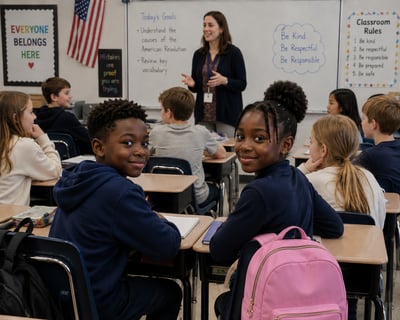
School is in English. Homework is in English. Friends, social media, TV, music — English. A child can spend fourteen hours a day immersed in one language and come home to two hours of Haitian Creole. Over time, the dominant language wins, not because it is better, but because it gets more practice.
By the second generation, English becomes the primary language for most Haitian American children. By the third, Haitian Creole may be understood only partially, or reduced to a few phrases pulled out for family gatherings.
And then one day, a grandchild cannot hold a real conversation with a grandparent. Not because they don't love each other. Because the words are gone.
What Gets Lost With the Language
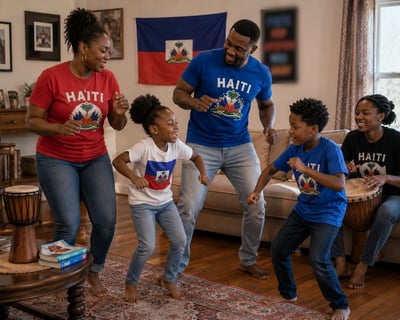
When people talk about preserving Haitian Creole, they are not talking about grammar rules or vocabulary lists:
-
They are talking about the jokes that only work in Creole.
-
The proverbs that do not survive translation.
-
The way an elder says something that carries fifty years of meaning in six words.
-
The songs, the stories, the specific way Haitian humor works, dry, sharp, layered.
Haitian Creole to English translation can move information across languages. But some things do not cross over cleanly. The texture of a culture lives in its language, and when that language fades, the texture goes with it.
This is what Haitian parents feel when they push their children to speak Creole, not nostalgia, but something more urgent. They are trying to pass something down that cannot be reconstructed once it is gone.
Language Is Also About Access
This is the part that goes beyond culture.
For a significant portion of the Haitian diaspora, older adults, recent arrivals, individuals with limited English proficiency, Haitian Creole is not a preference.
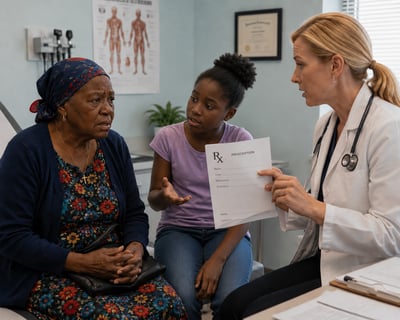
It is how they access healthcare, understand legal documents, navigate schools, and communicate with government agencies.
When professional Haitian Creole interpretation and translation services are not available, people fill the gap however they can.
Sometimes that means a bilingual family member stepping in. Sometimes it means a child interpreting a medical diagnosis for their parent. Neither of those is a real solution.
Effective language services are not a cultural courtesy, they are what makes participation possible for a community that has every right to be fully included.
What Keeping the Language Alive Actually Looks Like
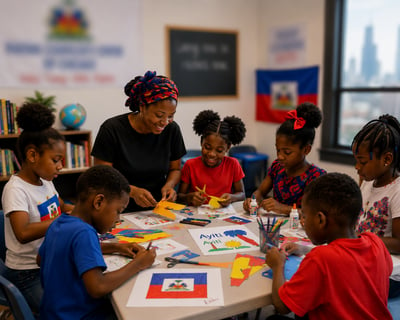
Language preservation does not require perfection. Most second-generation speakers will never sound exactly like their grandparents, and that is fine.
What matters is keeping the language in use, giving it enough space in daily life that it does not disappear.
That looks different for every family:
-
Some parents speak only Creole at home.
-
Some send children to Haitian cultural programs on weekends.
-
Some make a point of calling grandparents regularly and requiring the conversation to happen in Creole.
For organizations, it means communicating with Haitian communities in the language they actually speak, not assuming French will do, not running text through a machine and calling it done. It means investing in professional Haitian Creole language services that reflect the real complexity of the language and the people using it.
Every conversation in Creole is a small act of preservation. Not a grand gesture, just a choice, made again and again.
What We See at Creole Solutions

We work at the intersection of language and real life every day.
We see what happens when a patient finally understands their diagnosis in Haitian Creole, the shift in their face when something that was confusing becomes clear.
We see parents who can suddenly participate in school meetings instead of nodding along. We see community organizations build actual trust with Haitian families instead of talking past them.
And we see something else too. We see what it means to a person to be spoken to in their own language. Not translated at. Not summarized for. Actually spoken to.
Haitian Creole is a living language, it has survived:
-
Colonization.
-
Revolution.
-
Disaster and diaspora.
The question is not whether it is strong enough to survive the next generation. The question is whether we will make enough space for it to do so.
How is your family keeping Haitian Creole alive? And if your organization serves Haitian communities, we'd love to talk about how professional Haitian Creole interpretation and translation services can help you do it better.
Connect with Creole Solutions.
Frequently Asked Questions