
For an attorney, explaining a legal decision is often just another Tuesday. For the person sitting across the desk, it can be the moment they replay in their head for years.
An immigration ruling. The loss of a work permit. News that a family will be separated, at least for a while. These moments carry weight on their own.
Now imagine hearing them in a language you don't fully understand, while your attorney watches your face for a reaction you're too overwhelmed to give.
That's the gap a qualified Haitian Creole interpreter is there to close.
When the conversation involves a life-changing legal decision, interpretation can't be treated as a formality you check off before the meeting starts.
It's not about swapping English words for Haitian Creole ones. It's about making sure the client actually understands what's happening to them, and feels able to ask what they don't.
The Decision May Be Clear to You
It May Not Be Clear to Them
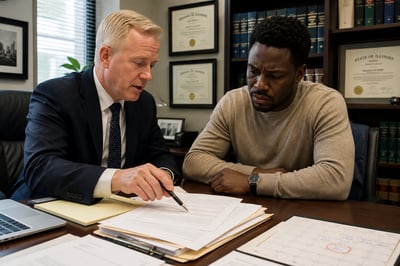
Attorneys live inside legal language. Petitions, appeals, employment authorization, eligibility windows, filing deadlines, these terms roll off the tongue after a few years of practice.
For a client, especially one who just received news they weren't expecting, that same vocabulary can feel like a wall.
Speaking some English doesn't mean someone can follow a dense legal conversation, particularly under stress. Fear and confusion make it harder to process even simple sentences, let alone legal ones.
A professional interpreter gives the client a real chance to hear that information in Haitian Creole and respond to it in kind.
But having someone in the room who speaks both languages is only the starting point. How the meeting is prepared and run matters just as much.
Prepare Before the Conversation Starts
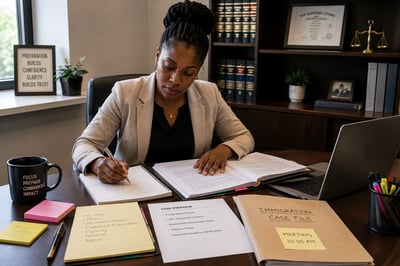
If you know a meeting will involve a significant legal decision, don't wait until you're walking into the room to think about language support.
Give your interpreter context ahead of time. That might mean sharing the purpose of the meeting, the type of legal matter involved, key terminology likely to come up, the names of any agencies or organizations in play, and the documents that will be discussed.
An expert Haitian Creole interpreter brings more to the table than fluency in two languages. The job requires handling terminology, tone, and emotionally difficult conversations accurately, often in real time.
A little preparation on your end makes that job easier and the conversation smoother for everyone in the room.

Speak Directly to the Client
One of the easiest things an attorney can do is keep speaking to the client, not about them.
Instead of asking the interpreter, "Can you ask him if he understands what happened?" just ask the client directly: "Do you understand what happened and what the next steps are?"
The interpreter's job is to carry that message across languages, not to become the person you're addressing. This small shift keeps the conversation feeling natural and lets the client stay at the center of it, rather than watching a conversation happen around them.
Break the News Into Pieces
When the information matters this much, there's a pull to explain everything at once. But a long explanation packed with legal terms is hard to absorb even without a language barrier in the mix.
It helps to slow down and separate the conversation into pieces:
what happened, what it means for the client's situation, whether there are deadlines or dates that matter, what the client needs to do next, and whether they have questions before moving on.
This matters especially in immigration cases, where a missed deadline or a misunderstood instruction can carry real consequences.

Give People Room to Process
A conversation about immigration status, or any major legal matter, is rarely just informational. It's emotional.
The client may be thinking about their family, their job, or their ability to stay in the country, all while trying to keep up with what's being said.
Silence doesn't always mean someone understands, or that they have nothing to ask.
Let the interpreter finish, and let the client sit with what they just heard before moving forward. Resist the urge to fill every pause. Those extra few minutes are often when the real question finally surfaces.
Interpretation Isn't the Same as Document Translation

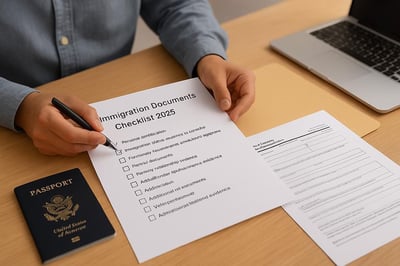
Client might leave a meeting having understood everything, thanks to a skilled interpreter, and still walk out with a stack of paperwork they can't read: a legal notice, immigration forms, a letter explaining the decision, instructions with deadlines attached.
If those documents are only in English, the language barrier doesn't end when the meeting does. It just moves to the kitchen table.
Depending on the situation, organizations may need both interpretation and translation. Interpretation covers the spoken conversation. Translation makes sure the paperwork that follows is just as accessible. Together, they close the loop.

More Than Translation
When someone is receiving information that could reshape their life, the conversation deserves to be clear, respectful, and genuinely understood, not just technically interpreted.
That doesn't mean the interpreter offers legal advice or interprets the attorney's reasoning for the client. Their role is to carry the conversation across languages as accurately and naturally as possible.
For law firms, immigration professionals, and any organization working with Haitian Creole-speaking clients, planning for language access before a difficult meeting isn't extra effort. It's part of doing the job right.
The meeting itself might last thirty minutes. What the client walks away understanding from those thirty minutes can shape everything that comes after.
Difficult Conversations Deserve Clear Communication

Legal and immigration decisions are complicated enough without a language barrier making them harder to carry.
If your organization works with Haitian Creole-speaking clients, having a professional interpreter in the room can mean the difference between a client who understands their situation and one who leaves more confused than when they arrived.
Creole Solutions provides expert Haitian Creole interpretation and translation services for law firms, immigration professionals, and organizations that need to communicate high-stakes information clearly.
Whether you need a Haitian Creole interpreter for a sensitive legal conversation or support translating documents from English to Haitian Creole to English, our team can help you prepare before the conversation even begins.
Contact Creole Solutions to talk through your Haitian Creole interpretation and translation needs.
Frequently Asked Questions