
Across the country, employers are having conversations they never expected to have. As changes to Haitian TPS ripple through workplaces, HR teams, managers, and legal departments are suddenly tasked with explaining work authorization, benefits, and next steps to employees who are scared, confused, and often hearing all of this in their second (or third) language.
For Haitian employees with limited English proficiency, these meetings can be a lot to absorb. One misunderstood detail, a date, a document, a benefit, can leave someone unsure about their employment status or what options they actually have.
What's Actually Happening in These Meetings
Lately, we've seen more employers reviewing the work authorization status of employees who were previously covered under Temporary Protected Status.
In these meetings, HR often has to ask a hard question: does this person have any other valid immigration status that would let them keep working?
When the answer is no, employers are typically the ones who have to deliver the news that employment will end. Many will also let the employee know that if their immigration situation changes down the road and a position opens up, they're welcome to reapply.
There's no getting around it, these are emotional conversations. And they need to be handled with accuracy and care.
Why Language Access Matters Here
For a lot of Haitian employees, Haitian Creole is simply the language they think and feel most clearly in, especially when the topic is as heavy as employment, benefits, or legal status.
When these conversations happen only in English, important details can get lost:

- Why the job is ending
- What paperwork is being asked for
- What rights and responsibilities they have
- What benefits are still available to them
- What their 401(k) or retirement options look like
- What community and legal resources exist
- Whether there's a path back to employment later
A professional Haitian Creole interpreter in the room changes all of that. Employees can finally ask the questions on their mind and get real answers, in real time — not a watered-down version of the conversation.
How Creole Solutions Fits In
This is exactly the kind of moment Creole Solutions exists for. We provide interpretation and translation support to help employers communicate clearly with Haitian employees during workforce transitions tied to TPS.
Our interpreters show up for:
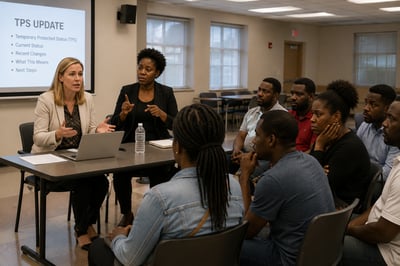
- HR meetings about employment eligibility
- TPS-related employee discussions
- Benefit review meetings
- Exit meetings and workforce transition conversations
- Information sessions with immigration attorneys
- Employee resource and support meetings
When there's a professional interpreter present, employees aren't left guessing. They can ask questions in Haitian Creole and get clear, immediate answers, which means less confusion for them and fewer follow-up headaches for HR.
Getting the Paperwork Right, Too
Meetings are only half the picture. Employees also need something they can take home and actually read, documents that hold up once the conversation is over and the emotions have settled a little.
That often includes:

- Benefit information packets
- 401(k) and retirement plan documents
- Separation notices
- HR communications
- Resource guides
- Employee assistance information
- Legal and community support materials
Accurate English to Haitian Creole translation means employees can sit with these documents on their own time, reread the parts that matter, and make informed decisions about what comes next.
Dignity Matters, Even When the News Is Hard

What's happening with Haitian TPS is touching thousands of workers and their families right now. Employers still have to follow federal regulations, that part isn't optional. But how they communicate is very much within their control.
Clear interpretation during the meeting. Accurate translation of the paperwork afterward. Small things, but they add up to an employee walking away understanding their options instead of walking away confused and afraid.
 Work With Creole Solutions
If your organization is navigating TPS-related changes with Haitian employees, we're here to help.
Creole Solutions provides professional Haitian Creole interpretation and translation for employers, HR teams, legal departments, healthcare organizations, and community agencies supporting Haitian workers through this transition.
Whether you need an interpreter in the room for a sensitive conversation or accurate English to Haitian Creole translation of your workforce documents, our team is ready to help you communicate clearly and with the respect these moments deserve.
Frequently Asked Questions


-3.png?height=200&name=Blog%20Headers%20Template%20(1)-3.png)
