And Most People Don't See It
There is a particular kind of loneliness that does not look like loneliness from the outside.
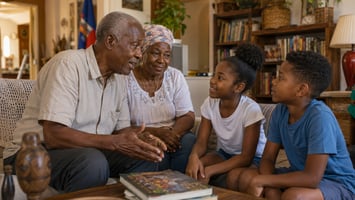
An older Haitian woman sits in her daughter's living room in Miami. The apartment is full, grandchildren doing homework, a television on in the background, the smell of food from the kitchen.
Her daughter works double shifts at the hospital. Her grandson speaks to her in English now, mostly. The neighbors have never knocked on the door.
She is surrounded by people. And she is completely alone.
This is the reality for a growing number of Haitian elders in the United States, and it is one of the most overlooked challenges facing Haitian communities today.
What Nobody Warned Them About
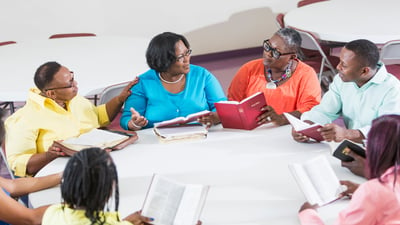
Many Haitian seniors come to the United States later in life, often to reunite with adult children or grandchildren. The move makes sense on paper. Better healthcare, more stability, family nearby.
What nobody fully prepares them for is the loss of everything else.
In Haiti, community is not optional, it is the structure of daily life. Neighbors know each other by name. Churches are social centers. Older adults are not set aside; they are consulted, included, present. Their age carries weight.
In the United States, that structure disappears almost overnight. Adult children work long hours. Grandchildren are absorbed into school and English and a world that moves fast. The church might be far away. The neighbors might never introduce themselves.
And suddenly, someone who spent sixty or seventy years as an active, connected member of a community is spending most of their days alone in an apartment where they cannot read the mail, cannot call the doctor without help, and cannot explain what they are feeling to anyone nearby.
When Language Becomes a Wall
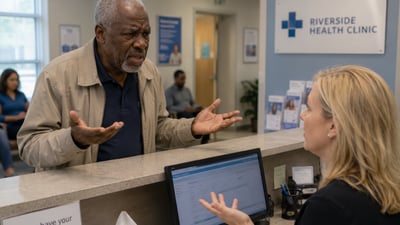
For Haitian seniors who primarily speak Haitian Creole, the language barrier does not just create inconvenience. It creates dependency.
Scheduling a medical appointment, speaking with a social worker, understanding an insurance form, asking a question at a community meeting, these become tasks that require finding someone to help.
Often that someone is a family member who is already stretched thin, or a grandchild who should not be put in the position of translating a cancer diagnosis or a legal document for their grandmother.
The alternative, for many seniors, is simply not doing these things at all. They avoid appointments. They do not ask questions they need answered. They nod along in conversations they cannot follow and hope they understood enough.
Over time, that withdrawal compounds. Less engagement leads to more isolation. More isolation leads to depression, anxiety, cognitive decline. And because it happens quietly, inside homes and waiting rooms and community centers, most people around them never notice how serious it has become.
What Happens in the Doctor's Office

Healthcare is where this becomes most visible, and most consequential.
A Haitian senior who cannot comfortably communicate with their provider is not just uncomfortable. They are at risk.
They may not accurately describe their symptoms. They may not understand what their medication does or when to take it. They may leave an appointment more confused than when they arrived and not come back.
When a qualified Haitian Creole interpreter is present, everything changes. The senior asks the questions they have been holding for months. They understand what is actually being recommended and why. They feel like a patient, not a problem to be managed.
That shift, from passive and confused to informed and heard, is not a small thing. It is the difference between care that works and care that misses the person entirely.
The Weight It Puts on Families

This isolation does not stay contained to the senior. It spreads.
Adult children become default interpreters for every significant conversation, medical, legal, financial. They translate while managing their own jobs, their own children, their own stress.
The relationship with their parent shifts. Instead of time together, there are logistics. Instead of connection, there is coordination.
Professional Haitian Creole language services do not replace family. They free families to actually be families — to sit with a parent and talk, instead of sitting with a parent and trying to explain what the doctor just said.
What Organizations Can Actually Do
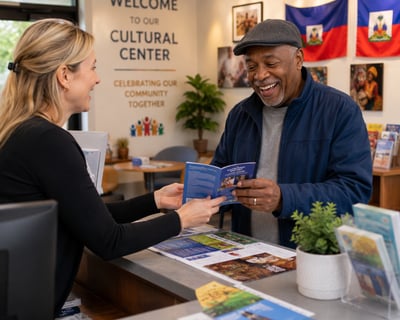
Many organizations that serve older adults already offer valuable programs, health education, senior wellness, housing assistance, nutrition support.
The question is whether Haitian seniors can actually access them.
A program that runs entirely in English, with no interpretation available, is not truly available to a Haitian Creole-speaking elder. They may show up. They may sit through it. But participation is not the same as presence.
Planning for language access from the beginning, not as an afterthought, not as a last-minute accommodation, is what makes the difference.
It signals to the community that they were considered before they arrived, not after someone noticed the communication was not working.
For many Haitian seniors, being fully understood in a public space is not something they experience regularly. When it happens, it matters more than most organizations realize.
At Creole Solutions, This Is Personal
We work with healthcare providers, community organizations, government agencies, and senior programs that serve Haitian populations.
We have seen what changes when a Haitian elder can finally communicate with their doctor without relying on a grandchild to translate. We have seen the relief on someone's face when they realize they do not have to guess what just happened in that meeting.
Haitian Creole is our only focus. That means we understand not just the language but the cultural context behind it — the way elders communicate, the things they may be reluctant to say directly, the nuances that a general interpreter or a translation tool will miss.
If your organization serves Haitian seniors, we would like to help you do it better.
Frequently Asked Questions