


If your company, school, or organization works with Haitian Creole-speaking employees, clients, or...
How We Prepare and What to Plan Ahead
For a long time, events about Haiti happened in every language except Haitian Kreyòl.
Trainings were delivered, town halls were held, conferences moved forward — and decisions were made while Haitian Creole speakers sat in the room trying to follow along in a second or third language. They were present, but not really part of the conversation.
More organizations are finally asking for Haitian Creole interpretation services for their meetings, trainings, conferences, and community events — and building language access into the plan earlier instead of treating it as a last-minute add-on. We see that shift in the requests coming into Creole Solutions, and it matters.
But there's one part of the process most organizers never see: the preparation that happens before the event begins.
When interpretation is done well, it's invisible. Guests put on a headset, speakers keep their natural pace, and Haitian Creole-speaking participants follow the event in real time without falling behind the room. From the outside, it looks effortless.
What people don't see is everything that had to be decided in advance to make that work.
Before the doors open, we've already worked through questions like:
-
How many interpreters does this event actually need?
-
Will interpretation be simultaneous or consecutive?
-
Where should the booth be placed?
-
How will the interpreted audio reach people in the room — and people joining remotely?
-
Have the interpreters received the agenda, speaker names, slides, and any technical terminology ahead of time?
All of that gets worked out before anyone walks in the door, because language access isn't just a courtesy. It determines whether your event actually works for everyone in it.
Why Haitian Creole Interpretation Needs
to Be Planned Early
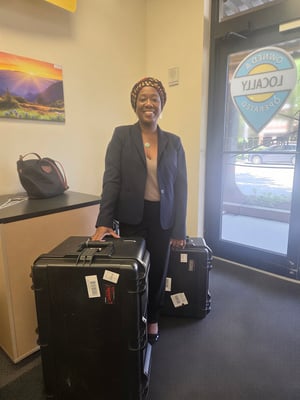
Shipping On-Site Interpretation Equipment Ahead of an Event
The biggest misconception about interpretation is that it starts when the interpreter arrives. It doesn't.
By the day before a live assignment, our team is already moving. Equipment — booths, transmitters, headsets — is packed, tested, and ready. Interpreters have reviewed the agenda and presentation materials.
If the event includes technical language, medical terminology, legal concepts, or community-specific references, that vocabulary has already been studied. If the event is hybrid, the audio plan is mapped out so both in-person and Zoom participants can hear clearly.
That preparation matters because interpretation isn't just converting words from one language to another. It's making sure Haitian Creole speakers can participate fully, absorb the same information at the same time, and stay engaged — not spend the session trying to catch up.
Simultaneous or Consecutive Interpretation:
Which One Does Your Event Need?
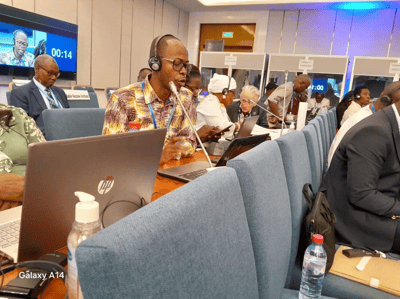
This is one of the most important decisions in multilingual event planning, and it affects everything from timing to equipment to staffing.
Simultaneous interpretation happens in real time. While the speaker continues talking, the interpreter delivers the message in Haitian Creole almost immediately. Attendees listen through headsets, and the event moves at one pace for everyone in the room.
This format works best for:
- Conferences and trainings
- Town halls and panel discussions
- Large meetings and hybrid or Zoom events
Speakers don't have to stop and restart every few sentences, and Haitian Creole-speaking participants receive the same information as everyone else without delay.
Consecutive interpretation works differently. The speaker pauses after each sentence or short section, and the interpreter then delivers that segment in Haitian Creole.
This can work for:
- Smaller meetings and one-on-one conversations
- Short interviews or brief community conversations
But for larger events or sessions with a real agenda, consecutive interpretation adds significant time. A one-hour presentation can easily run two hours once every segment is repeated. For most mixed-audience events, simultaneous interpretation is the better fit — it just requires the right setup to work smoothly.

What Goes Into Haitian CreoleInterpretation for an Event
When an organization reaches out to us, we're not just assigning a Haitian Creole interpreter to a date and time.
We're looking at the full structure of the event to make sure language access is built in from the start.
Here's what we work through behind the scenes:
Audience needs: Who needs interpretation, and how are they participating? Are Haitian Creole speakers attending in person, joining on Zoom, or both? Is this a small informal gathering or a conference with multiple sessions and speakers? Those answers shape everything we recommend.
Interpreter coverage: For sessions longer than about 30 minutes, one interpreter usually isn't enough. Simultaneous interpretation requires intense focus, and rotating between two interpreters keeps quality consistent throughout. That's an important detail to plan for — and budget for — early.
Equipment and audio setup: In-person simultaneous interpretation typically requires a booth, transmitters, and receivers or headsets for attendees. For hybrid or remote events, the setup also needs to account for platform-level audio routing so Haitian Creole-speaking attendees can access the interpreted channel clearly, whether they're in the room or on Zoom.
Event materials in advance: Interpreters do their best work when they can prepare. That means sending materials ahead of time — the agenda, presentation slides, speaker names and titles, acronyms, technical terms, handouts. Nobody wants their interpreter encountering a medical term or a program-specific acronym for the first time mid-session.
A tech check before the event: A 10-minute run-through the morning of can prevent the kind of scramble that happens in front of a full room. We always confirm that the audio path is clean, the platform settings are correct, and the interpretation channel is live before the event officially begins.
Haitian Creole Interpretation Planning Checklist
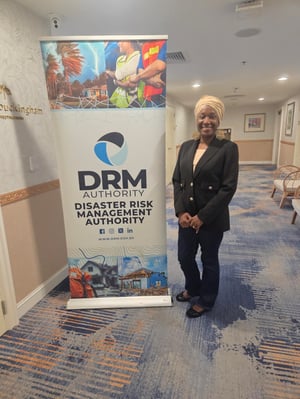
If you're organizing a meeting, conference, training, town hall, or community event, here's what to confirm before the agenda is finalized.
Why We Focus Only on Haitian Creole
At Creole Solutions, Haitian Creole isn't one language on a long list. It's the only language we work in.
We provide Haitian Creole interpretation and translation services for organizations locally, nationally, and internationally — whether the event is in person, on Zoom, or hybrid.
Because this is our only focus, our interpreters bring more than language fluency.
They bring cultural context, tonal awareness, and familiarity with the technical vocabulary that shapes how a message actually lands.
That difference matters. There's a gap between translating words and making sure Haitian Creole speakers can fully participate — ask questions, absorb details, and leave with the same understanding as everyone else in the room. We work to close that gap.
Build Language Access In From Day One
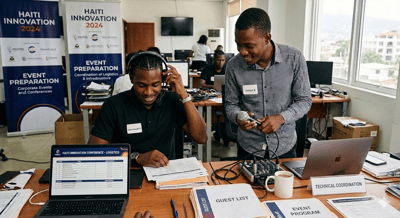
If you're planning a training, conference, meeting, town hall, or community event where Haitian Creole speakers need to participate fully, interpretation shouldn't be the last item on the checklist. It should be part of the plan from the beginning.
When the setup is right, interpretation feels effortless. That only happens because the preparation happened first.
Reach out to Creole Solutions before your agenda is finalized — we'll help you build language access into your event from the start.
Frequently Asked Questions