

Many Don’t — Here’s Why Imagine this: a patient has just undergone a medical procedure. The doctor...
Why Human Oversight Is Non-Negotiable in Medical Language Access
Artificial intelligence is transforming many industries, including healthcare.
AI-powered translation tools promise faster turnaround times, lower costs, and scalable multilingual communication. In some contexts, these tools can increase efficiency and support internal workflows.
However, in healthcare settings, the central question is not whether AI can translate a document.
The real question is:
When should it not?

At Creole Solutions, we believe responsible AI integration requires clear boundaries, especially when patient safety, legal compliance, and cultural trust are involved.
For organizations in Florida and beyond, where Haitian Creole is widely spoken, these decisions carry even greater weight.
Below are critical situations where AI should not independently translate healthcare content without qualified human oversight from an experienced translator, interpreter, or language services expert.
Life-Critical Medical Instructions
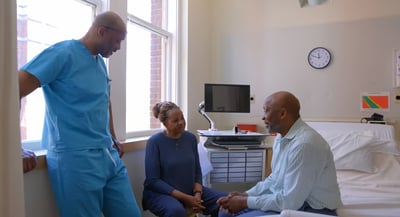
AI should not be used as a standalone solution for translating:
Healthcare communication carries clinical consequences. A subtle misinterpretation or culturally unclear instruction can directly affect patient outcomes.
For languages such as Haitian Creole, which has its own grammatical structure, tone, and cultural framework, automated systems attempting to translate Haitian Creole to English or perform Haitian Creole to English translation may produce outputs that appear technically correct but remain confusing or unnatural for the patient.
In clinical contexts, clarity must be deliberate — not assumed.
Professional interpretation and human-reviewed translation are not optional safeguards. They are essential protections.
Informed Consent and Legal Documentation

AI should never serve as the sole method for translating:
These documents carry legal weight.
Healthcare institutions remain responsible for ensuring that patients fully understand what they are signing. Automated outputs from artificial intelligence systems do not eliminate liability.
Only a qualified translator or certified interpreter with expertise in medical language services can ensure that terminology, tone, and intent are accurately conveyed when working between Haitian Creole to English and English to Haitian Creole.
Human review is not an added luxury.
It is a compliance safeguard.
Mental Health, Trauma, and Sensitive
Patient Interactions

AI lacks the cultural and emotional intelligence required to handle:
Certain communities interpret medical and mental health concepts through specific linguistic and cultural lenses.
Within Haitian Creole-speaking communities in Florida, tone and framing significantly impact trust and comprehension. A literal system-generated attempt to translate Haitian Creole to English — or vice versa — may unintentionally sound harsh, stigmatizing, or culturally disconnected.
In these contexts, professional interpretation requires cultural competence, not just vocabulary accuracy.
Language access is about trust — not just text.
Plain Language and Low-Literacy Materials

AI systems often produce translations that:
Healthcare materials frequently require plain language adaptation — not simply direct translation.
When organizations attempt to translate Haitian Creole to English or from English into Haitian Creole without human oversight, readability gaps can emerge.
Effective communication reduces risk.
Unclear communication increases it.
In multilingual healthcare environments, especially those serving vulnerable populations, accessible language services are a patient safety strategy, not just a regulatory checkbox.
Where Artificial Intelligence Can Be Used Responsibly

The issue is not whether artificial intelligence should be used.
The issue is defining where human oversight becomes non-negotiable.
AI can support healthcare organizations when used strategically, such as for:
Technology can assist.
It should not replace accountability.
The Florida Landscape

In Florida, Haitian Creole is among the most widely spoken languages after English and Spanish. In counties such as Miami-Dade, Broward, and Palm Beach, healthcare providers routinely serve Creole-speaking patients.
Yet many institutions still lack a structured Haitian Creole language services strategy — particularly when implementing artificial intelligence tools.
Language access directly impacts:
Without professional translation and qualified interpretation, AI implementation can unintentionally increase institutional risk rather than reduce it.
Technology Can Accelerate — But It Cannot Assume Responsibility
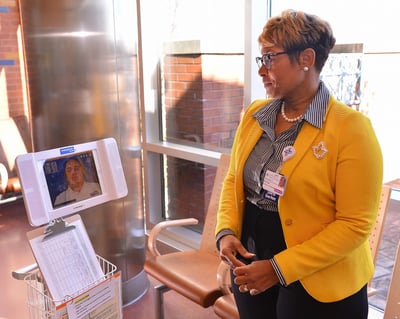
Healthcare communication is not transactional.
It is relational.
It involves real patients, real families, and real outcomes.
Whether you need to translate Haitian Creole to English, provide live medical interpretation, or ensure culturally accurate documentation through an experienced translator, human oversight remains foundational.
At Creole Solutions, we advocate for responsible AI integration paired with professional human review, cultural expertise, and rigorous quality assurance.
When patient safety and compliance are involved, clarity is not optional.
It is essential.
If your organization serves Haitian Creole-speaking patients in Florida and is evaluating AI-powered translation tools, we welcome a conversation about building a structured, risk-aware language services strategy led by true experts.
Responsible implementation requires more than software.
It requires expertise.
-2.png?height=200&name=Blog%20Headers%20%20(1)-2.png)