
Here's a problem most researchers don't see: patients are answering questions they don’t fully understand. They’re selecting numbers on scales, checking boxes, and providing data, but often they’re guessing.
Without proper comprehension testing, these failures remain invisible, quietly undermining the validity of study results and weakening true communication.
At Creole Solutions, our language services team has conducted multiple cognitive debriefings for medical questionnaires translated from English to Haitian Creole. What we’ve learned challenges two common assumptions: that linguistic accuracy alone ensures comprehension, and that plain language in English automatically becomes plain language in Haitian Creole. Neither is true.
Accurate translation is only one part of the equation. Real understanding requires cultural and linguistic alignment.

What We Found in Real Testing
Time and again, we discovered that questions that were grammatically correct and carefully translated from English to Haitian Creole still caused confusion when presented to real participants in Haitian Creole communities.
On paper, the wording looked precise, faithful to the source, and acceptable by formal language standards. In practice, however, patients paused, re-read items, or quietly guessed, because the way the question was framed did not match how they naturally talk about health, pain, or daily functioning.
What appeared to be a “good” translation in a review meeting turned out, in real conversations, to be unclear, overly abstract, or misaligned with everyday Haitian Creole speech patterns and cultural expectations.
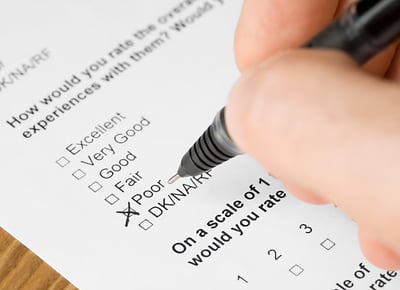
Rating Scales Were Consistently Problematic
Numeric or abstract scales, such as satisfaction levels or frequency ranges, were often difficult for participants to interpret intuitively. Many Haitian Creole speakers are more accustomed to expressing opinions through explanation rather than selecting a position on a fixed scale.
During cognitive debriefing sessions, participants frequently hesitated, asked the interpreter for clarification, or interpreted scale points differently than intended. Even experienced interpreters noticed patterns of uncertainty when abstract scales were used.
For example, a question asking patients to rate “symptom burden” on a 1–5 scale left participants unsure about what each number represented. When we reframed it in experience-based language “How much do your symptoms stop you from doing what you need to do each day?”—and anchored responses to specific daily activities, comprehension improved dramatically.
That shift was not just linguistic. It reflected deeper cultural context and how meaning is processed within the community.
Abstract Concepts Didn’t Transfer Cleanly
|
|
|


Even when source questions were written in plain English, those ideas did not always translate naturally into Haitian Creole. Plain language in one language does not guarantee plain language in another.
Terms like “overall health status” or “disease management” became awkward or overly formal when directly translated. The result? Longer explanations that defeated the purpose of concise questionnaire items.
This is where true translation and interpretation expertise matters. A literal conversion from English to Haitian Creole may be technically correct but still fail in real-world understanding.
Experience-Based Language Worked Better

Participants consistently understood questions more clearly when ideas were framed around what they feel, what they can physically do, and how a medication affects their daily lives.
Questions grounded in concrete experiences resonated immediately. Abstract nouns required mental processing and reinterpretation. In healthcare research, that extra cognitive step can distort data.
Effective communication in medical research requires more than bilingual ability. It requires experts who understand how meaning shifts across languages and lived experiences.
Recommendations Before Translation

Based on our findings from cognitive debriefing within Haitian Creole communities, we recommend the following before any questionnaire moves into translation:
Strong language services begin long before the first word is translated.
Choosing the Right Expert Matters

Not every bilingual professional is qualified to handle medical translation and interpretation. Selecting the right expert or team of experts directly affects research integrity.
When choosing an expert interpreter or translator, look for professional interpreters who:
In clinical research, precision matters. But so does cultural fluency.
Why This Matters

Cognitive debriefing is not a formality. It is a safeguard for meaningful communication, equitable language access, and reliable data.
For studies involving Haitian Creole, investing in professional language services ensures that questionnaires are not only accurately translated from English to Haitian Creole, but also understood as intended.
At Creole Solutions, our team of professional interpreters and linguistic experts bridges the gap between technical accuracy, cultural context, and real-world comprehension, because clear questions lead to trustworthy answers.


.jpg?height=200&name=Blog%20Headers%20%20(1).jpg)
