

Each May, Haitian Heritage Month gives us a chance to celebrate the vibrant culture, rich history,...
This May, the Creole Solutions team traveled, listened, and came back with a lot to think about.
It started in Chicago, at City Hall, where the Haitian community gathered with Mayor Brandon Johnson to mark Haitian Heritage Month.
There's something about standing in a public building surrounded by Haitian flags and Haitian faces that reminds you — this community is here. Part of this city. Part of this country.
A Month of Celebration and Reflection
A few days later, the team was in Boston for the flag raising at City Hall on May 15. The blue and red flag going up, the music, the elders watching with pride, the children watching to learn what pride looks like.
When they began La Dessalinienne in Haitian Kreyòl inside Boston City Hall, there were goosebumps in the room. Our anthem, in our language, out loud.
Watching the Haitian Flag Rise
in Boston
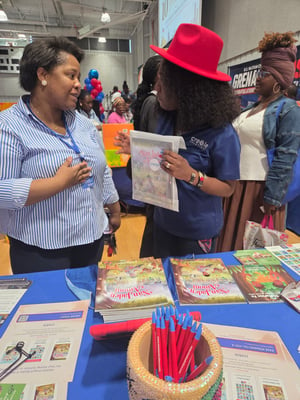
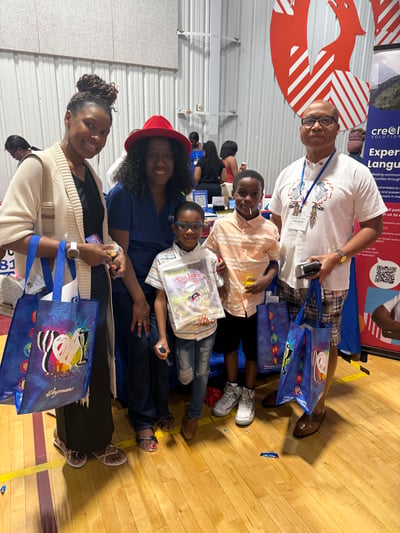
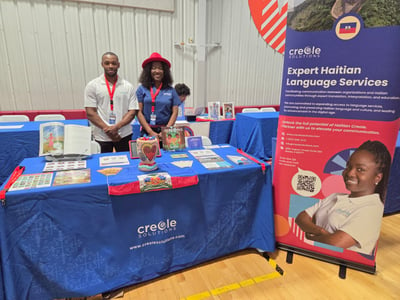
The next morning, May 16, Creole Solutions set up a table at the Haitian American Business Expo.
The second edition of Nan Jaden Amoni, alphabet posters, giveaways for the kids. But what came back from that table was something else entirely.
Conversations That Stayed With Us
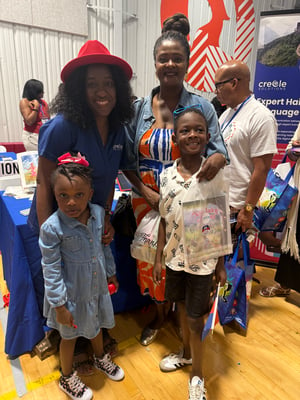
The team lost count of the parents who came over quietly with some version of the same thing on their mind. "I should have started earlier." "My son understands but won't speak." "My daughter is afraid of being corrected."
That last one is the sentence that kept replaying.
Over and over throughout the month, the same story surfaced. Young Haitian Americans who want to speak Kreyòl but feel like they can't. Not because they don't love Haiti.
Not because they lack the ability. Because the moment they try, someone laughs. Someone corrects their grammar in front of the room. Someone tells them their Kreyòl "isn't real Kreyòl." And then we wonder why they switch to English the moment they sense judgment.
That part of Haitian Heritage Month deserves to be said out loud, even if it's uncomfortable.
Why Heritage Learners Matter
A community can't claim to love its language and then shame the people trying to learn it. Heritage learners aren't weak speakers.
They're speakers who were raised in a country where Kreyòl wasn't given space, carrying whole identities across two or three languages at once. They deserve patience, real teachers, and a community that opens the door instead of closing it.
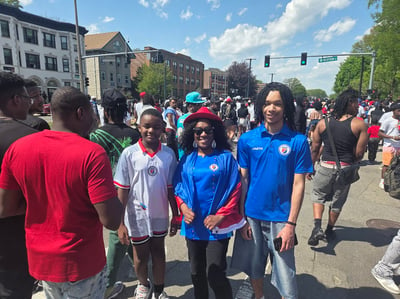
The expo confirmed the need. The Haitian parade on May 17 confirmed it again. The energy, the families along the route, the kids in their colors — the culture is alive. Young people want in. The door needs to stay open.
How Creole Solutions Is Responding
This is why Creole Solutions is committing more of its work to heritage learners. Books that meet them where they are. Stories that reflect life between two cultures.
Learning tools that let them practice without fear. Spaces where mistakes are part of learning, not proof of failure.
More Than a Heritage Month

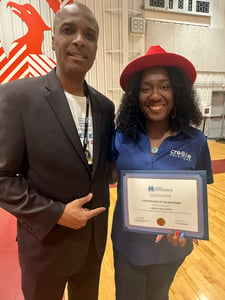
This past Friday, the Creole Solutions team joined a panel following the screening of Heroes of the Massacre River, a conversation about history, memory, and what it costs to tell the truth about who we are.
Language kept coming up. A people who lose their language lose access to their own story. And shame is one of the ways languages die.
The month isn't over. On Wednesday, May 27, Creole Solutions will be part of a panel hosted by Localization Today and Multilingual Media titled "Beyond Borders: Haitian Identity, Diaspora & the Power of Cultural Narratives." They'll be bringing this conversation with them.
If there's one thing to carry forward from this month: the next time you hear a young Haitian American trying their Kreyòl — don't correct them in front of the room. Don't laugh. Answer them in Kreyòl. Slow down. Teach them a word. Welcome them home.
That's what heritage really means. That's what this month is really about.
Keep the Conversation Going
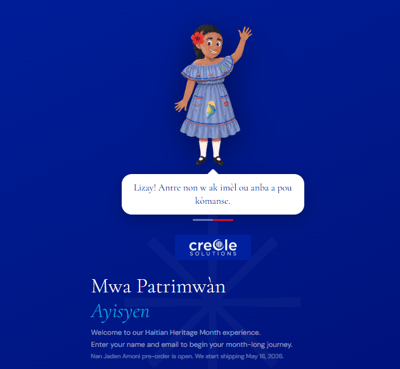
Visit HaitianHeritage.com to explore Haitian Heritage Month resources, discover Nan Jaden Amoni, and join Creole Solutions as we build more for heritage learners in the months ahead.
|
|
|
Frequently Asked Questions