
A Global Legacy That Still Matters
January 1st is widely known as New Year’s Day, a time for fresh starts and celebration around the world. In Haiti, however, this date carries an even deeper historical and cultural significance.
On January 1, 1804, Haiti declared its independence, becoming the first free Black republic and the first nation born from a successful slave revolt. This moment marked not only a national victory, but a defining turning point in global history.
Every year, Haitians commemorate this historic moment not only with reflection and pride, but also by sharing Soup Joumou, a traditional pumpkin-based soup that was once forbidden to enslaved Africans and later became a powerful symbol of freedom and culture.
This blog explores how Haiti’s Independence Day shaped the world, the impact it had on other nations, and whether those ideals of freedom and equality have truly materialized today.
Haiti’s Independence:
A Turning Point in World History
Haiti’s independence was more than a national victory—it was a global disruption to colonial power structures. At a time when slavery and European imperialism dominated much of the world, Haiti proved that enslaved people could overthrow one of the most powerful empires of the era.
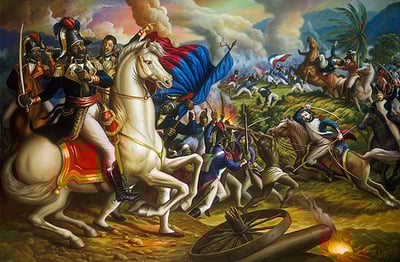
Key historical impacts include:
- The end of French colonial rule in Saint-Domingue, France’s wealthiest colony
- The first nation to permanently abolish slavery at a national level
- Inspiration for enslaved and oppressed peoples across the Americas and beyond
Haiti’s revolution challenged the deeply rooted belief that freedom and self-governance were privileges reserved for European powers.
The Ripple Effect Across the Americas and Europe
Influence on Abolitionist Movements
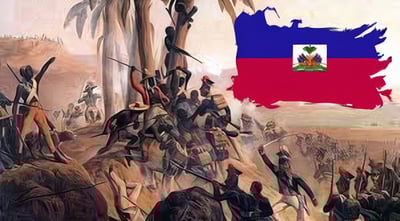
Haiti’s success sent shockwaves through slave-holding societies. Enslaved and free Black communities across the Caribbean, Latin America, and the United States drew inspiration from Haiti’s example.
The revolution accelerated abolitionist discourse and forced colonial powers to confront the instability of slave-based economies.
Impact on Latin American Independence Movements
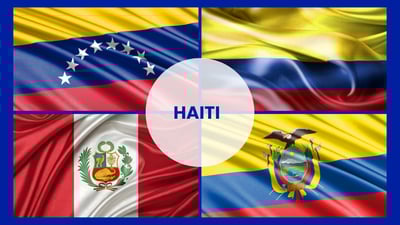
Haiti played a direct role in the liberation of other nations.
Most notably, Haiti supported Simón Bolívar by providing weapons, soldiers, and refuge—on the condition that he abolish slavery in the territories he helped liberate.
This support contributed to independence movements in:
| 🌎 Venezuela | 🌎 Colombia |
| 🌎 Ecuador | 🌎 Peru |
Haiti’s contribution is often omitted from mainstream historical narratives, yet it was instrumental in reshaping the political map of Latin America.
Economic and Geopolitical Consequences
Haiti’s independence also altered global economics.
France’s defeat weakened its presence in the Americas and contributed to the Louisiana Purchase, which doubled the size of the United States.
This single transaction reshaped North American history and global power dynamics.
The Cost of Freedom: Isolation and Punishment

Despite its groundbreaking achievement, Haiti paid a heavy price for its independence. Many world powers feared the spread of similar revolutions and responded with:
These measures severely limited Haiti’s economic growth and laid the foundation for long-term instability—an impact that continues to affect the nation today.
Has Haiti’s Global Impact Truly Been Realized Today?
More than two centuries later, Haiti’s revolutionary ideals of freedom, equality, and human dignity remain universally celebrated—but unevenly applied.
Progress since independence:
Ongoing challenges:
While the world adopted many of the principles Haiti fought for, Haiti itself has not fully benefited from them.
Soup Joumou: Freedom Served at the Table

The tradition of eating Soup Joumou on January 1st is more than a cultural custom—it is a living reminder of resilience and liberation.
Once denied to enslaved Haitians, the soup became a symbol of reclaiming dignity, identity, and autonomy.
Today, families gather to share Soup Joumou as an act of remembrance and resistance, passing history from one generation to the next.
Why Haitian Independence Still Matters Today
Haiti’s independence challenges the world to confront uncomfortable truths about freedom, justice, and historical accountability. It reminds us that:
As we celebrate New Year’s Day, recognizing Haitian Independence Day offers an opportunity to honor a global legacy that helped redefine freedom itself.
By remembering Haiti’s past, we gain a clearer understanding of the present—and a responsibility to shape a more equitable future.
How Creole Solutions Contributes
to Preserving Haitian Culture
At Creole Solutions, we believe that language is central to cultural preservation and access. Through professional language services, including translation and interpretation in Haitian Creole, we help ensure that Haitian communities are seen, heard, and respected.
By supporting culturally informed translation and interpretation, we contribute to the preservation of Haiti’s history, identity, and traditions, bridging language gaps while honoring the legacy of independence, resilience, and culture that continues to shape Haitian communities worldwide.