
Why Language Access Matters for Haitian Creole-Speaking Families
Every August it's the same rush: new backpacks, new schedules, and a stack of paperwork that has to get signed before the first bell rings.
Enrollment forms, emergency contacts, health records, school policies, technology agreements, lunch applications, permission slips. The list never seems to end.
For most families, that's already a lot to keep track of. But for parents who don't read or speak English fluently, that stack of papers comes with an extra hurdle: figuring out what each document actually says, which ones need a signature right away, and who to ask when something isn't clear.
Schools serving Haitian Creole-speaking communities need to treat language access as a core part of back-to-school planning, not something to scramble for at the last minute.
That means going beyond translating a handful of forms. Families need both professional Haitian Creole translation and qualified interpretation throughout enrollment and the entire school year.
The Back-to-School Paperwork Families Need to Understand
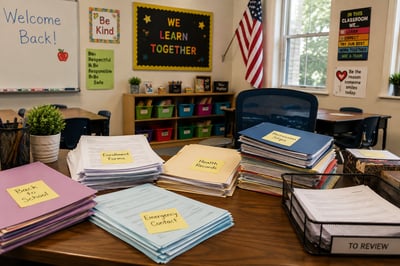
Depending on the district, parents may be handed:
- Enrollment and registration forms
- Emergency contact information
- Medical and immunization requirements
- Allergy and health information
- Student handbooks and school policies
- Transportation and bus information
- School meal and lunch applications
- Technology and device agreements
- Photo and media release forms
- Field trip permission slips
- Parent consent forms
- Special education and IEP-related documents
These aren't just routine paperwork. Many of them ask parents to make decisions, provide important information, or give informed consent.
When a family doesn't fully understand what's in front of them, it's easy for a deadline to slip by, a form to come back incomplete, or a signature to go on something without really knowing what it means.
Accurate Haitian Creole translation helps make sure parents have access to the same essential information as everyone else.
Translation Helps
But Sometimes Families Need a Conversation

Written translation is a critical piece of language access, but paper doesn't answer every question.
A parent might read a translated form and still need to ask:
- What information do I need to provide?
- Why is this form required?
- What happens if I don't turn it in on time?
- Who can explain this school policy to me?
That's where professional interpretation comes in.
Schools communicate with parents in plenty of situations that call for real-time, two-way conversation. A qualified Haitian Creole interpreter lets parents and school staff understand each other clearly, with each person speaking for themselves—not through someone summarizing or filtering what's said.

Interpretation may be needed for:
- Enrollment and registration appointments
- Parent-teacher conferences
- Meetings with school administrators
- IEP and special education meetings
- Meetings with counselors or support staff
- Health-related conversations with the school nurse
- Behavioral or disciplinary meetings
- School orientation sessions
- Emergency communications
- Conversations about a student's academic progress
A translated document gives parents access to written information. An interpreter gives them the chance to actually take part in the conversation, ask questions, and get answers in a language they understand.
Speak Directly to the Parent

During an interpreted conversation, it's worth remembering something simple: the interpreter is there to facilitate communication, not to become the person being addressed.
Instead of saying:
"Can you ask her if she understands the enrollment requirements?"
School staff can speak directly to the parent:
"Do you understand the enrollment requirements, or do you have any questions?"
The interpreter simply relays that message accurately in Haitian Creole.
That small shift changes the entire tone of the conversation. Parents become active participants instead of observers watching a conversation happen around them.
Language Access Helps Families
Participate From Day One
The first few weeks of school often set the tone for a family's relationship with the school for the rest of the year.
When parents can understand the paperwork they receive and communicate directly with teachers and staff, they're in a better position to:

- Complete forms correctly
- Meet important deadlines
- Understand school policies and expectations
- Ask questions about their child's education
- Participate in meetings and school decisions
- Respond to health or safety concerns
- Build stronger relationships with teachers and staff
Language access isn't just about handing over information. It's about making communication possible in the first place.
For Haitian Creole-speaking families in the diaspora, having access to both translated documents and professional interpretation can remove barriers that would otherwise keep them from fully participating in their child's education.
Back-to-School Is the Perfect Time to Prepare
Schools shouldn't have to scramble to find a translator or interpreter only when an urgent situation comes up.
Back-to-school planning is the ideal window to figure out which documents should be translated ahead of time and which situations are most likely to call for interpretation. A proactive language access plan might include:

- Translating the enrollment and registration documents used most often
- Preparing Haitian Creole versions of key school policies and family communications
- Identifying upcoming meetings that may require interpretation
- Arranging interpretation for parent-teacher conferences and orientations
- Having access to remote or phone interpretation for conversations that come up unexpectedly
- Setting up a reliable process for requesting language services throughout the school year
Planning ahead helps schools respond more efficiently, and it makes sure families have the information they need right when they need it.
Translation Gives Families Information
Interpretation Gives Them a Voice
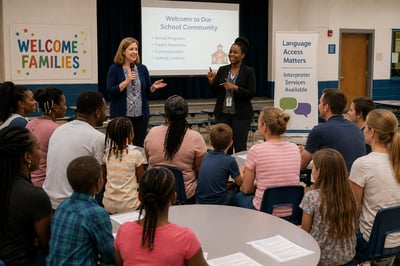
A strong school-family relationship depends on communication. Parents need to understand the documents placed in front of them, but they also need real opportunities to ask questions, raise concerns, and take part in important conversations about their kids.
That's why language access needs to be more than paperwork translation alone.
By pairing professional Haitian Creole translation services with qualified interpretation, schools can build more accessible communication for families from the first day of enrollment through the last day of the school year.
Make Language Access Part of Your
Back-to-School Plan
Back-to-school season brings enough challenges without language barriers adding to the pile.
Creole Solutions provides professional Haitian Creole translation and interpretation services to help schools communicate clearly with Haitian Creole-speaking families. From enrollment paperwork and school documents to parent meetings and important conversations, we help make communication more accessible.
Because every parent deserves to understand the information they're given—and to have a voice in their child's education.
Contact Creole Solutions to talk through your school's Haitian Creole translation and interpretation needs for the upcoming school year.
Frequently Asked Questions